AI Governance Maturity Assessment Checklist

AI Governance Maturity Assessment Checklist
An AI governance maturity assessment checks whether an organization can prove that its AI systems are inventoried, owned, risk-classified, approved, monitored, logged, reviewed, and improved. The goal is not to award points for having more policies. The goal is to reveal where governance is still informal, where controls are repeatable, and where evidence is strong enough for audit, buyer review, or regulatory scrutiny.
Beginner-friendly explanation
Think of this checklist like a health check for enterprise AI. A low score means AI use may depend on informal habits and scattered documents. A higher score means the team can show who owns each system, what risk it carries, what controls apply, what evidence exists, and when the system is reviewed again.
Key Takeaways
- Assess maturity by checking operational evidence, not by counting policies.
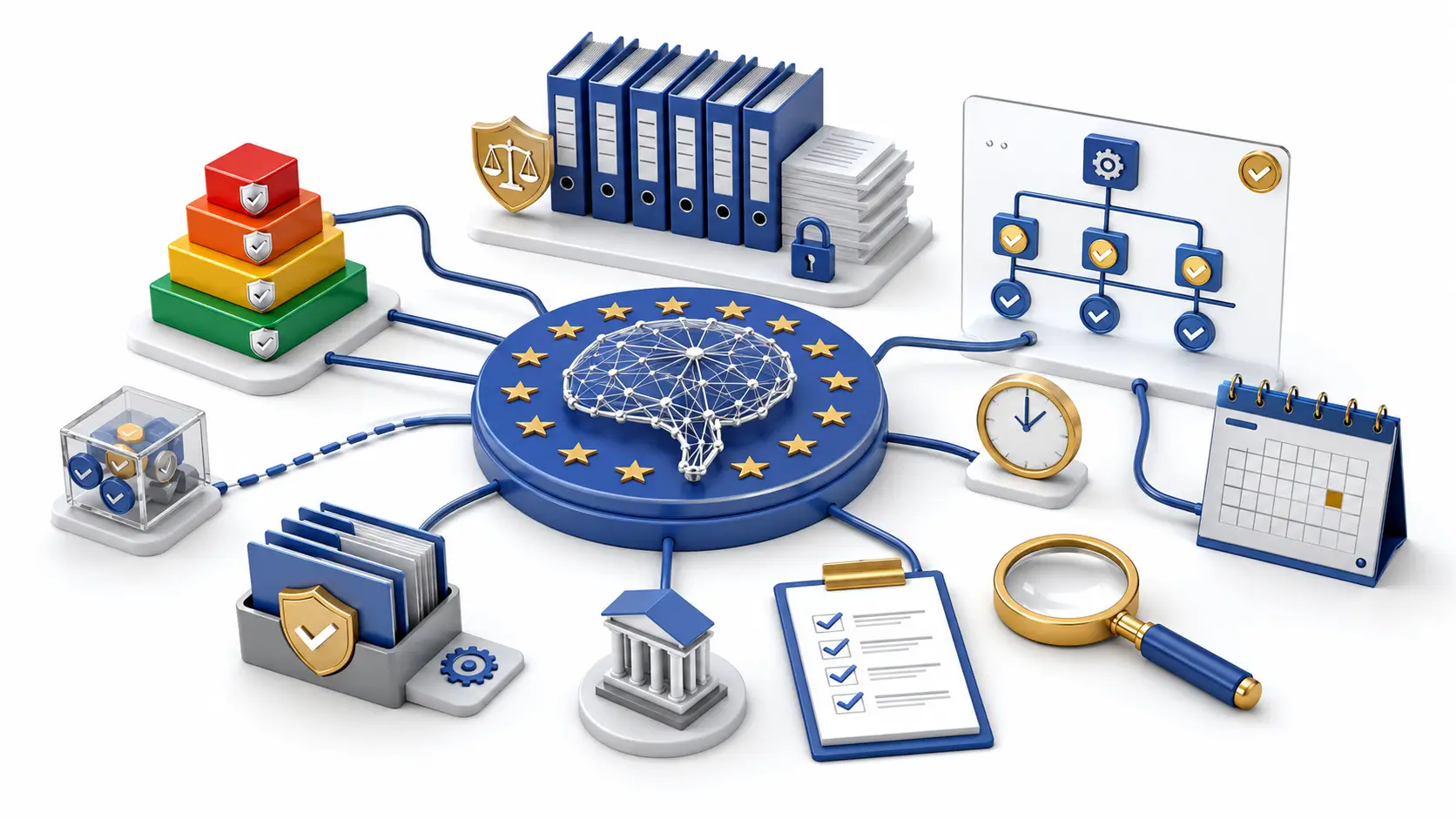
- Use NIST AI RMF functions such as Govern, Map, Measure, and Manage as a practical organizing lens.[1]
- ISO/IEC 42001 makes continual improvement central to AI management systems, so maturity should be reassessed over time.[2]
- High-risk AI systems need stronger documentation, risk management, record-keeping, and human oversight discipline under the EU AI Act.[3]
- AI agents and RAG systems should be scored for tool permissions, retrieval controls, logs, and rollback paths, not only model output quality.
Table of Contents 14 min read
Estimated time by section: audience 2 min, checklist 4 min, scoring 2 min, evidence 2 min, example 2 min, FAQ 2 min.
Who Should Use This Checklist?
AI Governance Lead
Use it to convert governance principles into reviewable operating evidence.
CISO / Security Team
Use it to check logging, permissions, incident response, and control ownership.
AI Engineer
Use it to identify missing model cards, evaluation records, RAG controls, and change logs.
Internal Audit
Use it to sample whether AI governance claims are supported by retained records.
The biggest maturity mistake is treating assessment as a survey. A useful AI governance assessment should ask, “Can we prove this system is known, owned, controlled, monitored, and improved?” If the answer depends on one person’s memory, the maturity score is lower than the policy deck suggests.
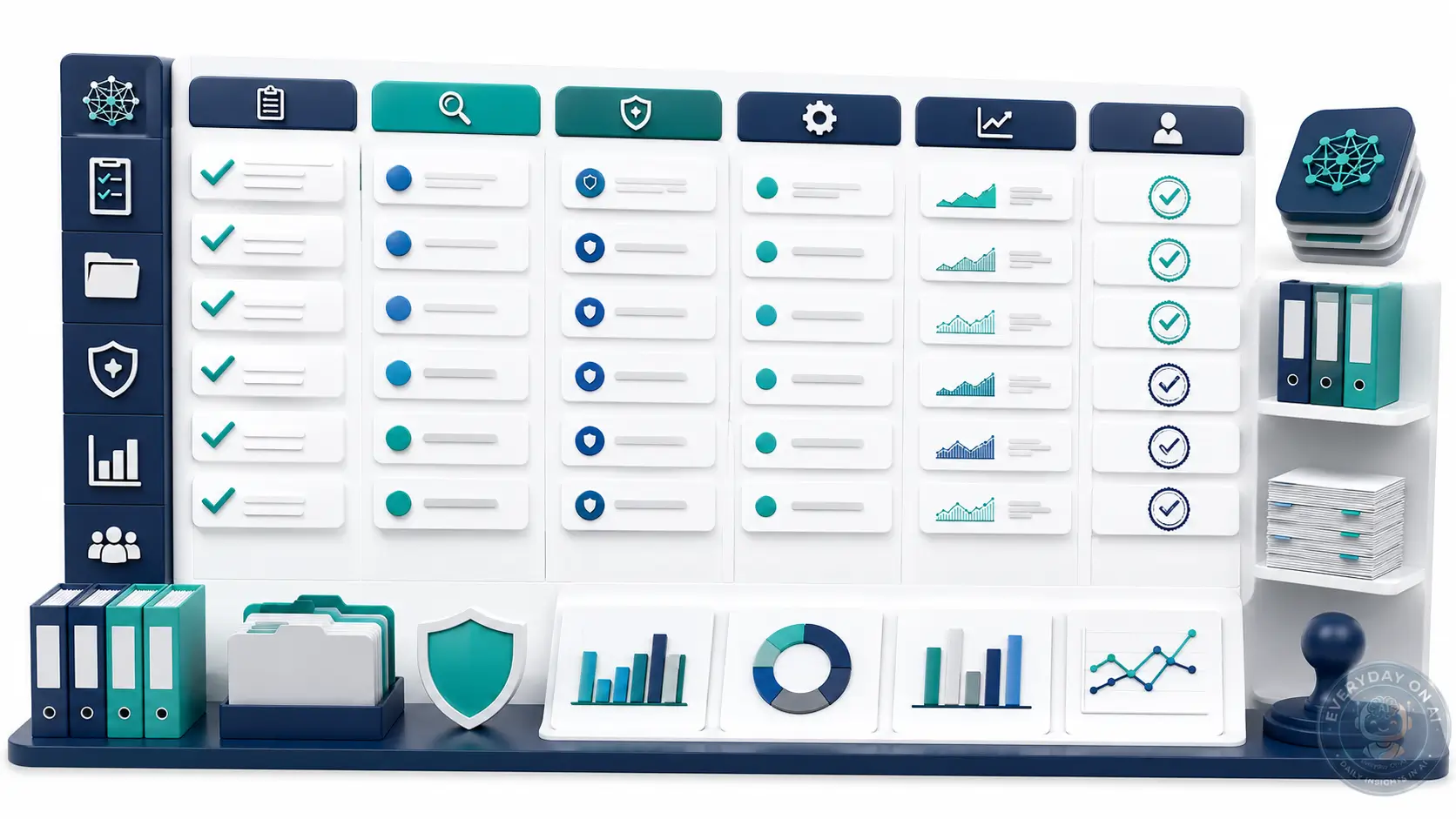
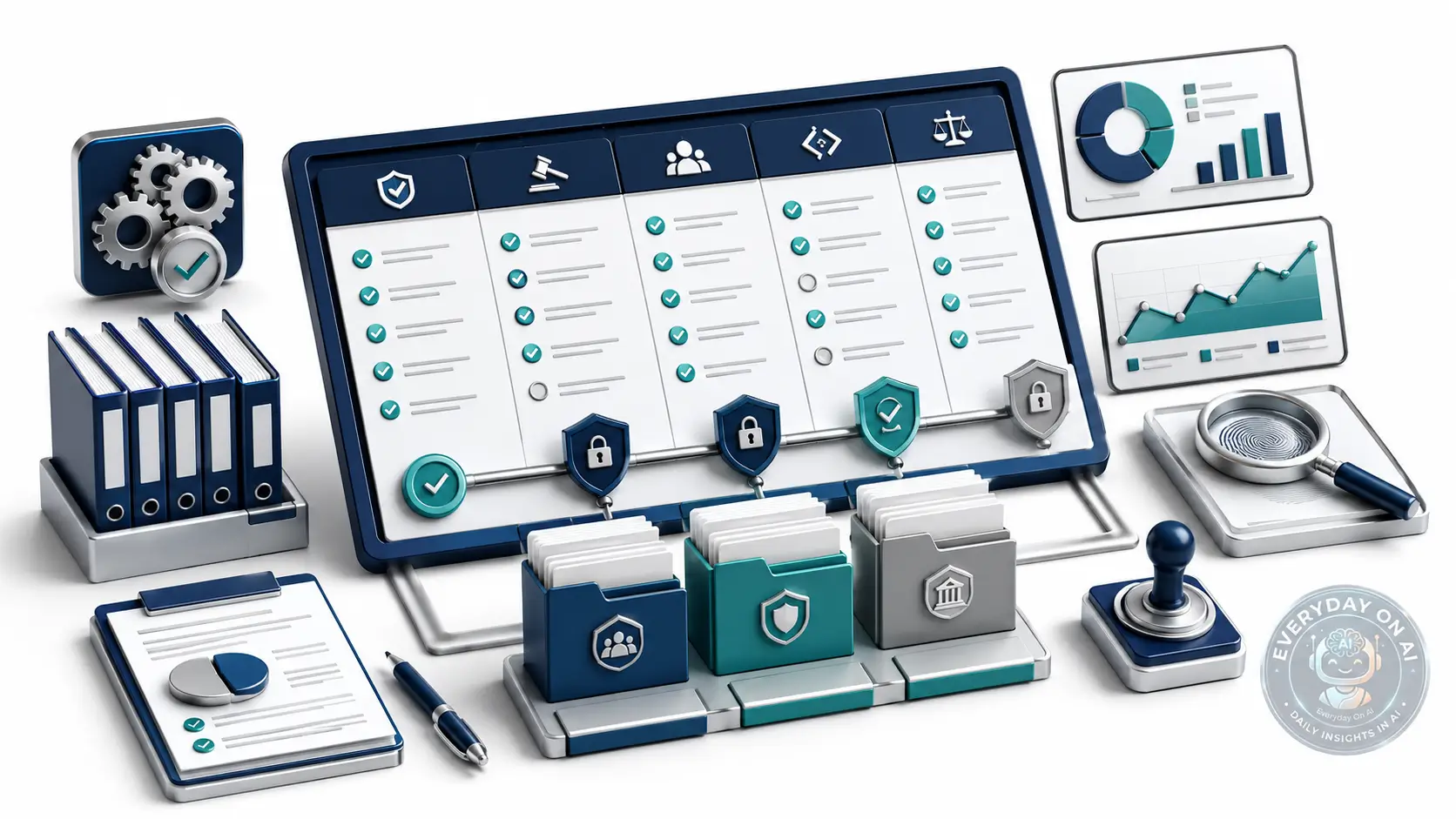
The 10-Part AI Governance Maturity Assessment Checklist
Use the checklist below for one AI system, a business unit portfolio, or the whole enterprise. For a young program, start with the highest-impact use cases instead of trying to assess every experiment at once.
| Checklist Area | Question to Ask | Evidence to Request | Weak Signal | Strong Signal |
|---|---|---|---|---|
| 1. Inventory | Do we know what AI systems exist? | AI register, owner, purpose, vendor, data, status | Spreadsheet with missing owners | Living inventory linked to evidence and review dates |
| 2. Ownership | Who is accountable for outcomes? | RACI, system owner, control owner | Shared responsibility with no named owner | Named business, technical, risk, and data owners |
| 3. Risk classification | How is risk determined? | Risk rubric, impact rating, decision record | Risk based on model popularity | Risk based on use case, data, autonomy, population, and impact |
| 4. Data governance | What data does the system use or expose? | Data sources, access rules, retention, lineage | Unknown training or retrieval sources | Documented provenance, access inheritance, and retention rules |
| 5. Approval workflow | What must happen before launch? | Intake form, review notes, approval date | Approval happens in chat threads | Risk-based gate with retained decision evidence |
| 6. Human oversight | Can humans intervene meaningfully? | Escalation rules, override protocol, review UI | Human review is mentioned but not operational | Defined intervention points with role-specific authority |
| 7. Monitoring | What is checked after deployment? | Metrics, logs, drift checks, incident triggers | Only uptime is monitored | Risk, quality, security, and behavior indicators are reviewed |
| 8. Vendor and third-party risk | Which suppliers affect the system? | Vendor review, model provider terms, data processing record | Vendor AI is assumed safe | Vendor capabilities, limits, data handling, and changes are reviewed |
| 9. Incident response | What happens when AI fails? | Incident playbook, escalation path, postmortem | No AI-specific triage | AI incident categories, owners, logs, and remediation steps exist |
| 10. Improvement loop | How does the program learn? | Review cadence, backlog, control updates | Assessment is one-time | Findings feed control updates, training, and roadmap decisions |
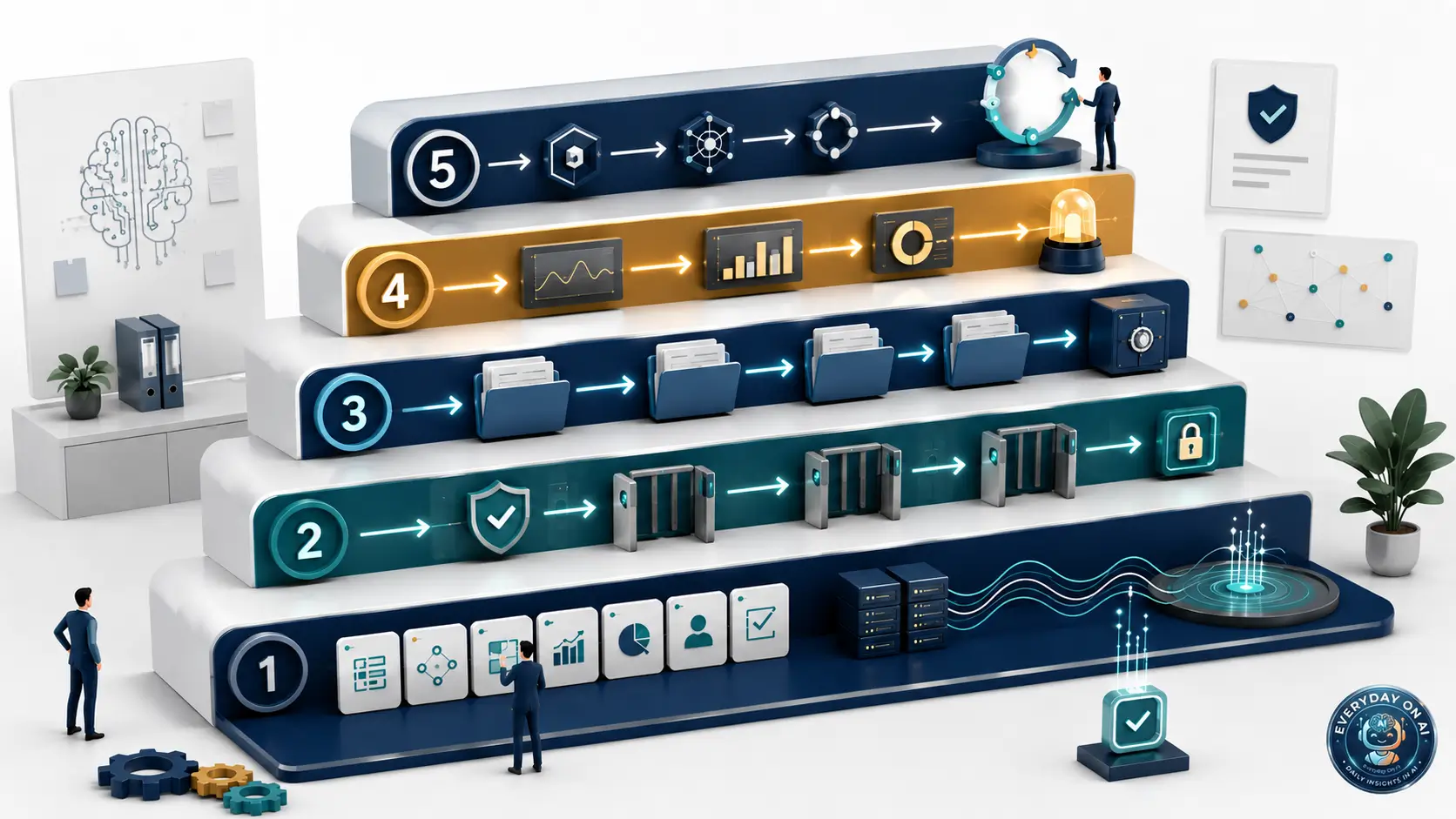
Scoring Method: 1 to 5 Maturity Levels
Score each area from 1 to 5. Do not average away severe gaps. If a system has strong policy documentation but no owner, no logs, or no approval record, treat that as a blocking weakness.
| Score | Maturity Level | Meaning | Recommended Next Step |
|---|---|---|---|
| 1 | Ad hoc | AI use is informal or unknown. | Create inventory and name owners. |
| 2 | Policy-based | Rules exist, but evidence is inconsistent. | Turn policy into intake, review, and evidence workflow. |
| 3 | Controlled | Important systems have repeatable controls. | Expand monitoring and standardize records. |
| 4 | Audit-ready | Evidence is linked, dated, retained, and testable. | Reduce manual friction and improve sampling. |
| 5 | Adaptive | Controls change when systems, vendors, risks, or rules change. | Use metrics and incidents to continuously improve governance. |
Evidence to Collect Before You Score
Evidence is the difference between governance maturity and governance theater. NIST describes the AI RMF as a practical, voluntary, use-case-agnostic framework for managing AI risks.[1] ISO/IEC 42001 focuses on establishing, implementing, maintaining, and continually improving an AI management system.[2] Both ideas point to the same operational habit: keep records that can be reviewed later.
- AI system inventory and owner map.
- Use-case risk classification and approval record.
- Data source, retrieval source, or vendor dependency record.
- Human oversight and escalation procedure.
- Monitoring metrics and incident triggers.
- Change log for model, prompt, data, vendor, and tool updates.
- Sample logs that show input, output, retrieved context, tool call, and policy decision where relevant.
Worked Example: Scoring One RAG Assistant
This is an illustrative example, not a claim about a real company. It shows how to use concrete numbers without pretending a private case study exists.
| Dimension | Current Finding | Score | Next Control |
|---|---|---|---|
| Inventory | 1 production RAG assistant is registered with business and technical owners. | 4 | Add vendor dependency and data-source review dates. |
| Risk classification | Classified as medium risk because it supports employees but does not make final customer decisions. | 3 | Reassess if it starts drafting customer-facing commitments. |
| Evidence | Launch approval exists, but retrieval quality review is not retained. | 2 | Store monthly citation-quality samples and reviewer notes. |
| Monitoring | Uptime is monitored; unsupported answer rate is not. | 2 | Add unsupported-answer sampling and escalation trigger. |
| Improvement | Findings are discussed, but not yet tied to a control backlog. | 2 | Create a 90-day governance backlog with owners and due dates. |
Before and After: What Changes When You Apply This
| Area | Before | After | Why It Matters |
|---|---|---|---|
| AI inventory | Teams remember systems informally. | Systems have owners, purpose, data, vendor, risk, and status. | Unknown AI cannot be governed. |
| Risk review | All AI tools get similar treatment. | Review depth follows impact, autonomy, data sensitivity, and legal exposure. | Risk-based review avoids both under-control and over-control. |
| Evidence | Records live in slides, chats, and personal folders. | Evidence is linked to system records and review dates. | Audit, buyer, and incident questions become answerable. |
| Improvement | Assessment ends as a score. | Findings become a prioritized control backlog. | Maturity improves only when gaps change behavior. |
Common Mistakes
- Scoring policy instead of practice. A policy without retained system evidence should not receive a high maturity score.
- Averaging away critical gaps. A Level 4 evidence process does not compensate for an unknown owner or uncontrolled vendor dependency.
- Ignoring AI agents. Agentic systems need tool permission, approval, and action-log review.
- Assessing once. Maturity should change as systems, data, vendors, laws, and business use change.
FAQ
What is an AI governance maturity assessment?
An AI governance maturity assessment is a structured review of how well an organization inventories, owns, risk-classifies, approves, monitors, documents, and improves AI systems.
What should an AI governance checklist include?
It should include AI inventory, system ownership, risk classification, data governance, human oversight, monitoring, vendor review, incident response, audit evidence, and improvement cadence.
How often should teams reassess AI governance maturity?
Teams should reassess maturity after major system changes, vendor changes, incidents, new high-risk use cases, or at least quarterly for important AI portfolios.
Is this checklist a compliance certification?
No. It is a readiness tool. It can support compliance preparation, but it does not replace legal review, formal audit, or certification against a standard.
Conclusion
An AI governance maturity assessment should make hidden risk visible. The most useful output is not a flattering maturity label. It is a prioritized list of missing owners, weak evidence, unmonitored systems, unclear approvals, and controls that must improve before AI use scales further.
If the assessment cannot point to evidence, it is not maturity assessment. It is optimism with a score.
5 Things to Remember
- Start with inventory and ownership.
- Score by evidence, not presentation quality.
- Classify risk by use case and impact.
- Keep logs and change records reviewable.
- Turn findings into an improvement backlog.
References
AI Governance Maturity Cluster
Use this checklist as the assessment layer between the pillar model and the scorecard template.
Next Step
Use this checklist to score one real AI system. Then compare the result with the full AI Governance Maturity Model to decide what must improve next.
Share this article