EU AI Act Digital Omnibus 2026: The New Compliance Timeline Explained

Dispa - The AI Buff
Author
⚡ TL;DR — What Changed
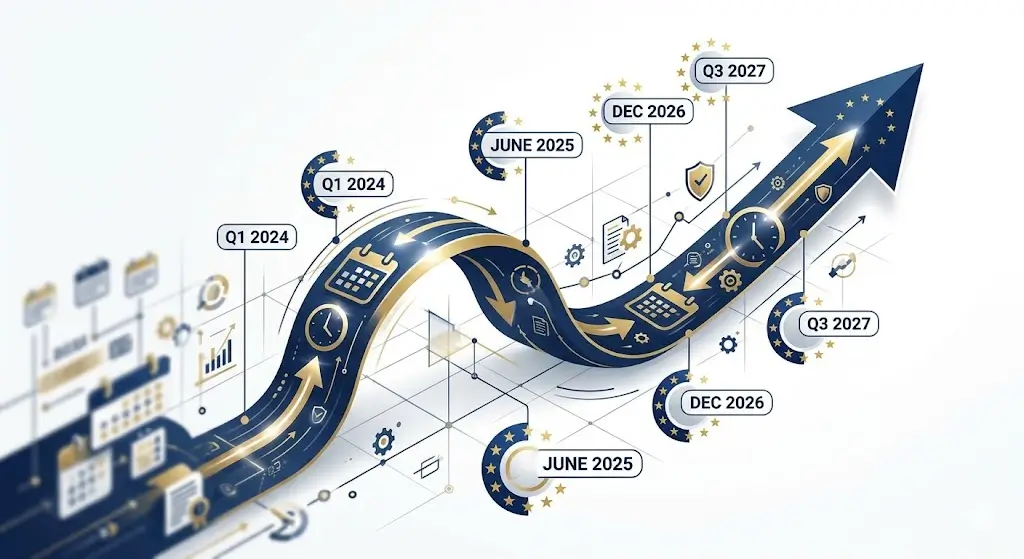
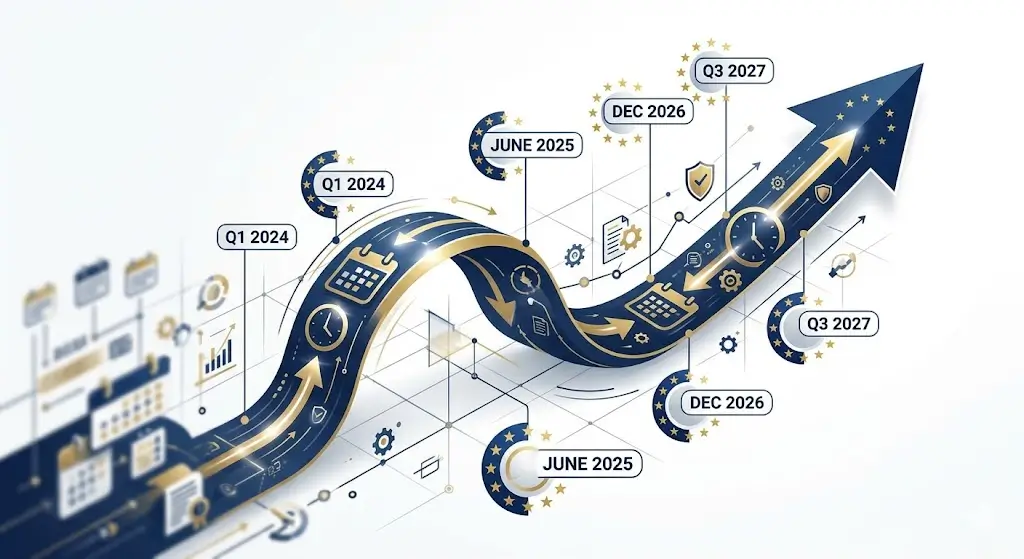
- On May 7, 2026, the Council of the EU and European Parliament reached a provisional political agreement on the “Digital Omnibus on AI” — the first amendment to the EU AI Act since 2024.
- Annex III high-risk AI obligations (the most common category — HR, credit, law enforcement AI) move from August 2, 2026 → December 2, 2027 (16 months later).
- Annex I high-risk AI (embedded in medical devices, lifts, radio equipment) moves from August 2, 2027 → August 2, 2028 (12 months later).
- A new Article 5 prohibition on AI “nudifier” apps and CSAM was added, effective December 2, 2026.
- Nothing about prohibited practices (Feb 2025) or GPAI rules (Aug 2025) changed — both remain fully enforced.
- Formal adoption was still pending as of mid-June 2026 — expected before August 2, 2026.
If your compliance calendar had “August 2, 2026” circled in red, you can uncircle it — for now. On May 7, 2026, EU negotiators reached a provisional political agreement that pushes back the most consequential deadline in the AI Act’s rollout by sixteen months.[1]
Ad Slot: leaderboard
Isi NEXT_PUBLIC_ADSENSE_CLIENT & AD_SLOTS
But “delayed” is doing a lot of work in that sentence, and the details matter enormously depending on what kind of AI system you build, deploy, or procure. This article breaks down exactly what moved, what didn’t, and — critically — what you should still be doing this quarter regardless.
Ad Slot: in-feed
Isi NEXT_PUBLIC_ADSENSE_CLIENT & AD_SLOTS
What Is the Digital Omnibus on AI?
The Digital Omnibus on AI is the first set of amendments to the EU AI Act since the regulation was adopted in June 2024.[3] The European Commission proposed it on November 19, 2025, as part of the broader “One Europe, One Market” roadmap aimed at reducing regulatory complexity across EU digital legislation while preserving the AI Act’s core safeguards.[1]
The path to agreement wasn’t smooth. A first round of trilogue negotiations on April 28, 2026 ended without agreement — the three EU institutions (Commission, Council, Parliament) couldn’t align on the details.[4] Negotiators returned to the table and reached the provisional agreement on May 7, with Member State representatives in the Council confirming it on May 13, 2026.[2]
“This marks the first deliverable under the ‘One Europe, One Market’ roadmap agreed by the three institutions, well within the set deadline.”
— Marilena Raouna, Deputy Minister for European Affairs, Republic of Cyprus, Council of the EU press release, May 7, 2026[5]
The legislator’s stated rationale for the delay is implementation readiness, not a retreat from the Act’s substance. The Commission recognized that compliance requirements can only be effective if the necessary supporting infrastructure is in place — referring to the harmonized standards, conformity assessment bodies, and national competent authorities that were not ready in time for the original deadline.[1]
Industry vs. Civil Society: Was This Controversial?
Yes — on both sides, and for opposite reasons. Understanding the debate matters for compliance teams because it signals how much further political pressure could push future amendments, in either direction.
The final agreement was reached at 4:30 a.m. on May 7, 2026, concluding what TechPolicy.Press describes as the most arduous phase of a six-month negotiation conducted under an exceptionally tight schedule.[11] The two co-rapporteurs steering the file through Parliament — Arba Kokalari and Michael McNamara — represent the centre-right and centre, respectively, which itself tells you where the political center of gravity landed.[11]
💼 Industry & Competitiveness View
Industry representatives had lobbied for the high-risk delay — and, according to Jacques Delors Centre analysis of the original Commission proposal, were pushing for an even later date than what was ultimately agreed.[12] The Commission’s own framing ties this to the Draghi competitiveness report and a broader “One Europe, One Market” simplification agenda spanning ten omnibus packages since February 2025 — covering everything from sustainability to agriculture to digital rules.[5]
⚖️ Civil Society & Fundamental Rights View
Civil society organizations and the Social Democrats group in the European Parliament called the broader Digital Omnibus package “unacceptable deregulation,” with analysis from Corporate Europe Observatory framing it as shaped substantially by Big Tech lobbying.[13] Separately and specifically on the AI Omnibus, the European Data Protection Board and European Data Protection Supervisor formally raised concerns that pushing high-risk dates later “could potentially impact fundamental rights protections.”[12]
“The left wing of Parliament — clearly in the minority in the current term — chose to spend its political capital on securing the new nudifier ban, ceding ground to the right to go all-in on its industry-friendly priorities… the outcome has left stakeholders from both civil society and industry frustrated rather than relieved.”
— TechPolicy.Press, “What the EU AI Omnibus Deal Changes for the AI Act and What Lies Ahead,” May 8, 2026[11]
The most useful framing for compliance teams comes from law firm Mishcon de Reya, which describes the outcome as “a targeted recalibration, rather than an entire change of heart” — the risk-based framework and its core obligations remain intact, but businesses now have more time to prepare against a somewhat narrower compliance perimeter.[14] Whether you read this as a relief or a missed opportunity likely depends on which side of the perspective grid above you started from — but operationally, both sides agree the underlying Annex III categories and obligations themselves were not watered down, only their timing.
The New Timeline: Old Deadlines vs. New Deadlines
| Obligation | Original Deadline | New Deadline (Omnibus) | Change | Status |
|---|---|---|---|---|
| Prohibited AI practices (Art. 5, original list) | Feb 2, 2025 | Feb 2, 2025 — unchanged | None | ✅ In force |
| GPAI model obligations (Art. 51–55) | Aug 2, 2025 | Aug 2, 2025 — unchanged | None | ✅ In force |
| Transparency obligations (Art. 50) | Aug 2, 2026 | Aug 2, 2026 — largely unchanged | Minimal | 🟡 Pending |
| AI-generated content watermarking grace period | 6 months | 3 months → Dec 2, 2026 | Shortened | 🟡 Pending |
| New “nudifier”/CSAM prohibition (Art. 5 addition) | N/A (new) | Dec 2, 2026 | New rule | 🟡 Pending |
| High-risk AI — Annex III (standalone, use-based) | Aug 2, 2026 | Dec 2, 2027 | +16 months | 🟡 Pending |
| High-risk AI — Annex I (embedded in regulated products) | Aug 2, 2027 | Aug 2, 2028 | +12 months | 🟡 Pending |
| National AI regulatory sandboxes established | Aug 2, 2026 | Aug 2, 2027 | +12 months | 🟡 Pending |
🟡 Pending = subject to formal adoption of the Digital Omnibus, expected before August 2, 2026.[6]
The most important row in that table is the second-to-last one. Annex III covers the high-risk use cases most organizations actually deal with — recruitment and HR tools, credit scoring, insurance pricing, biometric categorization, law enforcement risk assessment, and migration/border management systems. This is the category that drove most of the urgency around the original August 2026 deadline, and it’s the one that just moved by a year and a half.[7]
Annex I, by contrast, covers AI embedded in products already regulated under separate EU product safety frameworks — medical devices, lifts, radio equipment, machinery, toys. This category got a smaller, 12-month extension rather than 16 months.[7]
6 Things That Changed
1. High-risk AI deadlines: staggered, two-tier delay
Annex III (use-based) standalone high-risk systems: August 2, 2026 → December 2, 2027. Annex I (product-embedded) high-risk systems: August 2, 2027 → August 2, 2028.[7] This is the headline change and the one most likely to affect your roadmap.
2. New Article 5 prohibition: AI “nudifier” apps and CSAM
A new prohibited practice bans AI systems that generate or manipulate sexually explicit or intimate images, video, or audio without consent, or that create child sexual abuse material — effective December 2, 2026, following a transitional period.[8] Providers of general-purpose image- or video-generation tools must now actively assess foreseeable misuse risks at the design and deployment stage — this isn’t limited to companies that build “nudifier” apps; it reaches any provider whose general-purpose generative tool could foreseeably be misused this way.[2]
3. Watermarking grace period shortened (but the underlying deadline didn’t move much)
Counterintuitively, while high-risk obligations got more time, the grace period for implementing transparency solutions for AI-generated content (watermarking, labeling) was reduced from six months to three, landing on December 2, 2026.[9] Don’t read the overall “delay” narrative as uniform — some obligations actually tightened.
4. National AI regulatory sandboxes: 12-month extension
Member states’ deadline to establish AI regulatory sandboxes — controlled environments where providers can test high-risk AI systems under regulatory supervision before market placement — moves from August 2, 2026 to August 2, 2027. The agreement also expands real-world testing outside sandboxes to Annex I high-risk systems.[2]
5. SME relief extended to “small mid-cap enterprises” (SMCs)
Certain regulatory exemptions originally limited to small and medium enterprises now extend to small mid-cap enterprises — a new category the Commission introduced for proportionate penalty application. The Commission also gains powers to issue implementing acts that disapply overlapping AI Act requirements where sectoral regulation already covers identical ground.[6]
6. Machinery Regulation carve-out
AI embedded in machinery already covered by the EU Machinery Regulation is removed from the AI Act’s direct application. AI-related safety requirements for that machinery will instead be introduced through delegated acts under the Machinery Regulation itself — reducing the double-regulation problem for industrial equipment manufacturers.[9] Separately, the legal basis for processing special-category personal data for bias detection and correction — previously limited to high-risk system providers — now extends to all AI systems and GPAI models, subject to a strict necessity standard aligned with the EDPB/EDPS Joint Opinion 1/2026.[2]
3 Things That Did NOT Change
This is the part most “EU AI Act delayed!” headlines are skipping — and it’s arguably more important than the delay itself.
What Compliance Teams Should Do Right Now
“The hard part of AI Act compliance isn’t the documentation template. It’s finding every AI system in your organisation, deciding which Annex III category each falls into, and getting product and engineering to maintain the inventory as new systems ship. None of that depends on the standards being final. Start now and you have roughly 18 months to refine.”
— VerifyWise, “EU AI Act Omnibus: What Changed on 7 May 2026 and What to Do Next”[10]
The temptation with a 16-month delay is to deprioritize AI Act work entirely. That would be a mistake for three concrete reasons:
Ad Slot: rectangle
Isi NEXT_PUBLIC_ADSENSE_CLIENT & AD_SLOTS
The discovery and classification work doesn’t get easier with time — it gets harder as more AI systems ship. Every new AI feature your product or engineering teams deploy between now and December 2027 is another system that needs to be inventoried and classified. Starting now means classifying systems as they’re built. Starting in 2027 means a retroactive audit of everything shipped in the interim.
Transparency obligations under Article 50 are still on track for around August 2026. If your organization deploys chatbots, deepfakes, or AI-generated content that needs disclosure to users, this obligation track was barely touched by the Omnibus — and the watermarking grace period actually shortened.[9]
The new Article 5 prohibition on generative misuse is broader than it sounds. If your organization provides any general-purpose image or video generation capability — even as a feature within a larger product — you now need to document a foreseeable-misuse risk assessment ahead of the December 2026 transitional deadline.[2]
For the practical mechanics of building an AI system inventory and risk classification process — work that remains exactly as necessary as it was before May 7 — see our guide: How to Classify Your AI System Under the EU AI Act. For the documentation structure that Annex IV requires (still the eventual destination, just with more runway), see EU AI Act Documentation Requirements.
What This Means by Organization Type
| Organization Type | Practical Impact |
|---|---|
| HR tech / recruitment AI providers | Annex III deadline now Dec 2027 — but build the candidate-screening risk classification now while engineering resources allow it, not under deadline pressure later. |
| Foundation model providers (GPAI) | No change. GPAI Code of Practice obligations continue on the original Aug 2025 track. If you offer image/video generation, assess foreseeable misuse for the new Art. 5 prohibition before Dec 2026. |
| Companies deploying chatbots / AI content tools | Article 50 transparency obligations remain on the ~Aug 2026 track. Watermarking grace period is now 3 months (to Dec 2026), not 6 — less time than originally planned. |
| Medical device / lift / machinery manufacturers with embedded AI | Annex I deadline now Aug 2028 (+12 months). Machinery Regulation carve-out may mean some embedded AI exits the AI Act entirely — worth a targeted legal review. |
| SMEs and small mid-caps | New SMC category extends exemptions previously limited to SMEs — review whether your organization now qualifies under the expanded definition. |
| Any organization with an AI inventory project underway | Continue. The Omnibus changed deadlines, not the underlying requirement to know what AI systems you have and how they’re classified. |
Related reading in the EU AI Act series:
Case Study: Recruitment AI Under the New Timeline
To make the timeline changes concrete, here’s how they play out for the single most-cited Annex III high-risk category: AI used in recruitment and employment decisions — candidate screening, ranking, interview analysis, and performance or termination-related tooling.[15] This category was singled out by recruitment-sector compliance guides as one where “regulators caution against complacency: a year or two is not that long to overhaul or certify AI systems.”[16]
A Mid-Size HR Tech Vendor’s Compliance Calculus, Before and After
Note: this is a composite scenario, not a named company. The obligations, categories, and dates referenced are real and cited throughout this article — only the “vendor” is illustrative, to show how the timeline shift changes real planning decisions.
The system: An AI-powered applicant tracking platform that screens, scores, and ranks CVs for mid-market employers across the EU — squarely in the Annex III “employment and workers management” category.[15]
Before the Omnibus (planning as of April 2026)
After the Omnibus (planning as of June 2026)
What stayed the same in this scenario: the vendor is still a “high-risk AI system,” still subject to Annex III, still needs FRIA, bias audits, documentation, and registration eventually. What changed is sequencing — the same work is now spread across roughly 30 months instead of compressed into the final two quarters before August 2026. The compliance guide that originally told this vendor to “prep for August 2, 2026” was correct about what to prepare; the Omnibus only changed when it becomes enforceable.[17]

The practical lesson generalizes beyond recruitment AI: the Omnibus changed the denominator (how much time you have), not the numerator (how much work is required). For a step-by-step walkthrough of the FRIA and bias audit work itself, see AI Impact Assessment Template 2026.
Frequently Asked Questions
What is the EU AI Act Digital Omnibus?
The first set of amendments to the EU AI Act since its 2024 adoption — proposed by the European Commission on November 19, 2025, with a provisional political agreement reached May 7, 2026 and confirmed May 13, 2026.[3] Its main effect: a staggered delay to high-risk AI obligations, a new prohibition on AI-generated non-consensual intimate imagery, and simplification measures for SMEs and small mid-caps.
Has the EU AI Act’s August 2026 deadline been delayed?
Yes, for high-risk AI systems. Annex III (use-based) obligations move from August 2, 2026 to December 2, 2027 — a 16-month deferral. Annex I (product-embedded) obligations move from August 2, 2027 to August 2, 2028.[7] But formal adoption was still pending as of mid-June 2026 — if it isn’t adopted before August 2, 2026, original deadlines apply as written.[2]
What EU AI Act obligations are NOT affected by the Digital Omnibus?
Three tracks remain fully in force and untouched: Article 5 prohibited practices (enforced since Feb 2025), GPAI model obligations under Articles 51-55 (applicable since Aug 2025), and the overall four-tier risk classification architecture.[10] Article 50 transparency obligations also remain on roughly the original timeline — with the watermarking grace period actually shortened from 6 to 3 months.[9]
Should companies stop preparing for high-risk AI Act compliance now that the deadline moved?
No. The hardest part of compliance — discovering every AI system in the organization and classifying it against Annex III categories — doesn’t get easier with time, and doesn’t depend on final standards. Organizations that pause this work risk facing the same scramble in late 2027 that was originally feared for mid-2026.[10] Use the additional runway to build the inventory and governance processes properly rather than under deadline pressure.[1]
Was the Digital Omnibus controversial?
Yes, on both sides. Industry had lobbied for the delay — and reportedly for an even longer one.[12] Civil society groups and the Social Democrats in Parliament called the broader package “unacceptable deregulation” shaped by Big Tech lobbying, while the EDPB and EDPS formally warned that later high-risk dates “could potentially impact fundamental rights protections.”[12][13] TechPolicy.Press summarized the outcome as a “qualified success” that left “stakeholders from both civil society and industry frustrated rather than relieved.”[11]
How does the Digital Omnibus affect recruitment and HR AI systems specifically?
Recruitment and employment AI — candidate screening, ranking, interview analysis, performance and termination tooling — is explicitly Annex III high-risk.[15] The Omnibus moves the compliance deadline for this category from August 2, 2026 to December 2, 2027 — about 16 extra months for bias audits, FRIA, documentation, and registration.[7] However, if the screening tool is built on a general-purpose AI model, GPAI transparency obligations have applied since August 2025 and are untouched by this delay.[10]
📚 References and Sources
- Stibbe, “AI Act Reloaded? What the Latest AI Act Changes Mean in Practice.” Provisional agreement 7 May 2026, final compromise text 13 May 2026; legislator rationale on implementation readiness; “use the additional time strategically” guidance. stibbe.com
- Gibson Dunn, “EU AI Act Omnibus Agreement — Postponed High-Risk Deadlines and Other Key Changes.” Provisional agreement confirmed 13 May 2026; formal adoption expected before 2 Aug 2026; foreseeable misuse risk assessment for generative tools; sandbox and special-category data provisions. gibsondunn.com
- Global Policy Watch / Inside Privacy, “EU AI Act Update: Timeline Relief, Targeted Simplification, and New Prohibitions.” First amendments since June 2024 adoption; two-tier HRAIS deferral structure; formal adoption timeline. globalpolicywatch.com
- DLA Piper GENIE, “The Digital AI Omnibus: Proposed Deferral of High-Risk AI Obligations Under the AI Act.” 19 Nov 2025 Commission proposal; 28 April 2026 trilogue ended without agreement; 13 May 2026 further trilogue. knowledge.dlapiper.com
- Council of the EU (Consilium), “Artificial Intelligence: Council and Parliament Agree to Simplify and Streamline Rules,” May 7, 2026. Marilena Raouna quote; “One Europe, One Market” roadmap; sandbox deadline and watermarking grace period details. consilium.europa.eu
- Bits From Bytes, “EU AI Act Phase 1 Implementation Update,” June 9, 2026. SMC category introduction; sandbox deadline extension to Aug 2027; Machinery Regulation carve-out; status of each obligation track as of June 2026. bitsfrombytes.com
- Inside Privacy, “EU AI Act Update: Timeline Relief, Targeted Simplification, and New Prohibitions.” Annex III HRAIS postponed to 2 Dec 2027 (16 months); Annex I HRAIS postponed to 2 Aug 2028 (12 months). insideprivacy.com
- Travers Smith, “EU Agrees to Delay Key AI Act Compliance Deadlines,” May 8, 2026. New Article 5 prohibition on non-consensual intimate imagery and CSAM; “nudifier” apps definition. traverssmith.com
- Travers Smith, “The EU AI Act – The Current State of Play.” Watermarking grace period reduced from 6 to 3 months (Dec 2026 deadline); ongoing compliance steps recommended regardless of Omnibus status. traverssmith.com
- VerifyWise, “EU AI Act Omnibus: What Changed on 7 May 2026 and What’s Next.” Article 5 and GPAI tracks unaffected; discovery/classification work doesn’t depend on finalized standards; practical guidance on what to prioritize. verifywise.ai
- TechPolicy.Press, “What the EU AI Omnibus Deal Changes for the AI Act and What Lies Ahead,” May 8, 2026. Agreement reached 4:30am May 7 after six-month negotiation; co-rapporteurs Arba Kokalari and Michael McNamara; “qualified success” framing; left wing traded nudifier ban for ceding ground on industry priorities. techpolicy.press
- Jacques Delors Centre, “The EU’s Digital and AI Omnibus is Heading in the Wrong Direction,” March 2026. Industry lobbying for longer delay than proposed; EDPB/EDPS concerns about fundamental rights impact of later high-risk dates; negotiation timeline context. delorscentre.eu
- Corporate Europe Observatory, “Article by Article, How Big Tech Shaped the EU’s Roll-Back of Digital Rights,” January 2026. Civil society criticism of Digital Omnibus as deregulation; Social Democrats called it “unacceptable”; Big Tech lobbying context. corporateeurope.org
- Mishcon de Reya, “EU AI Act Simplified? Unpacking the AI Omnibus Agreement of May 2026.” “Targeted recalibration, rather than an entire change of heart”; risk-based framework and core obligations remain intact; UK businesses still need to comply. mishcon.com
- VaaSBlock, “EU AI Act High-Risk Deadline August 2026: Operator Compliance Guide.” Annex III categories including employment and workers management (recruitment, task allocation, performance monitoring, termination); deployer obligations regardless of who built the underlying model. vaasblock.com
- HeroHunt, “Recruiting Under the EU AI Act: Impact on Hiring (Full Guide).” August 2, 2026 as the original deadline for core high-risk obligations in recruiting; regulator caution against complacency; vendor compliance criteria. herohunt.ai
- EU AI Compass, “High-Risk AI Systems: EU AI Act Deployer Guide 2026,” May 8, 2026. FRIA mandatory before deployment for high-risk AI in credit/insurance and public services; Annex III mapping including HR/recruitment; “Plan for August 2, 2026… but that isn’t law yet” caveat. euaicompass.com
- HireTruffle, “EU AI Act and Hiring: 2026 Compliance Guide,” April 2026. “Prep for 2 Aug 2026: finish documentation, DPIAs, and training; lock in a bias testing and monitoring cadence”; high-risk hiring obligations checklist. hiretruffle.com
Sources verified June 13, 2026. This is a fast-moving regulatory situation — formal adoption status will be updated as it develops. This article does not constitute legal advice.
Ad Slot: leaderboard-2
Isi NEXT_PUBLIC_ADSENSE_CLIENT & AD_SLOTS
Share this article